
let’s change the housing system
Too often, housing options do not reflect the needs of young people. As a result, many young people are unable to move on from homelessness, build independence, or maintain stable housing.
Stepping stone homes - purpose built homes for young people ready to live independently after living in supported housing - give young people access, affordability and stability they need to start living independently.
We’re calling for the government to formally recognise stepping stone homes.

what are stepping stone homes?

Stepping stone accommodation provides affordable, transitional, housing at sub-market rents to support young people, in work or seeking work, who are transitioning into independent living. It acts as a critical bridge between supported housing and the private rented sector, providing residents with the opportunity to build financial resilience, tenancy management skills and general stability before finding long-term accommodation in the wider housing market.
There is no formal recognition of stepping stone homes as an established affordable housing product. As a result, proposals are routinely delayed. If stepping stone homes were recognised as an affordable housing product for single young people, this would help existing providers to build more affordable homes more quickly and will encourage other charities, housing associations, and private developers to replicate the affordable housing model to help meet the housing need across the country.
We need the government to take action and increase the availability of good quality, affordable stepping stone homes for young people.
examples of stepping stone accommodation
Centrepoint’s Independent Living Programme
Independent Living provides affordable, self-contained studios where young people can live independently for two to five years while working, saving and preparing for permanent housing.
Rent is capped at a third of a young person’s income. This gives them the chance to save money, build skills, progress in their careers and prepare for fully independent living. For many, it’s the difference between staying in temporary accommodation and finally having a secure place to build a future.
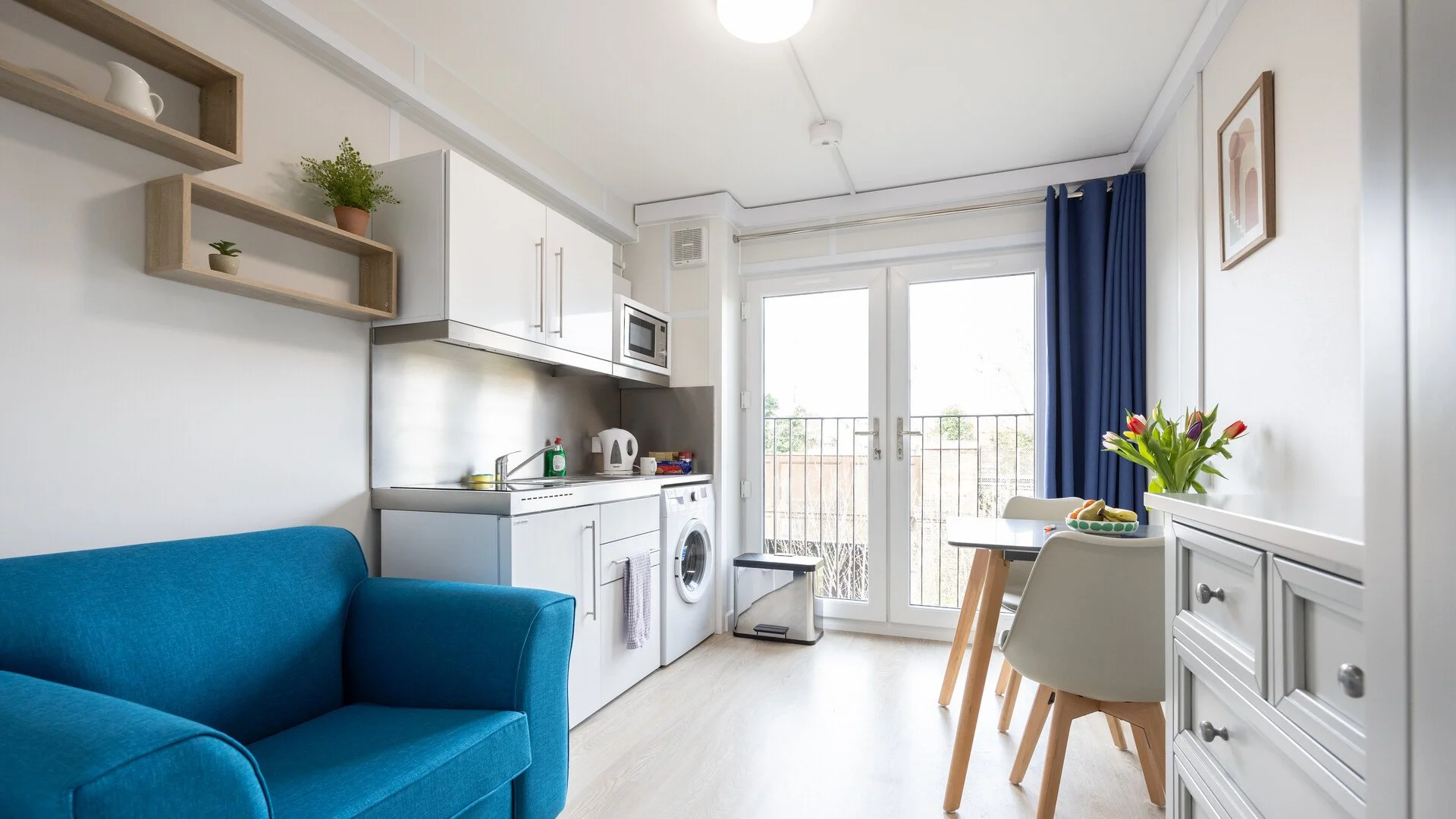
St. Basils’ Live and Work scheme
Originally launched in 2015, it offers high quality, low-cost accommodation to young people aged 18-25, who are in work or an apprenticeship, for up to two years.
With truly affordable rents at a discount of more than 50% compared to private tenancies, Live and Work properties give young people the opportunity to save for their future housing plans whilst working on their career, enabling them to live and work.
YMCA’s Move On accommodation
Our message to the government: Recognise stepping stone homes
Stepping stone homes are the right homes at the right time for young people already on the pathway to independence to leave the cycle of youth homelessness.
We’ve started a petition calling for the government to recognise and invest in stepping stone homes. Will you join us?
OUR letter to the secretary of state
Dear Secretary of State,
We are writing to you as the Youth Homelessness Collective, over 100 youth, homelessness and housing association organisations working to end youth homelessness, to call on the government to support the amplification of stepping stone homes. This will support young people on their pathway to independence, providing secure and stable housing that helps them in their employment and wellbeing outcomes.
Currently, too many young people are at risk of homelessness, held back from building a future due to the unaffordability of the private sector market and severe shortage in social housing. Demand far outstrips supply across the country, leaving thousands of young people stuck in costly supported housing with an inability to move on.
The lack of affordable housing options for young people creates a cliff edge for those living in supported accommodation. Tenants in supported accommodation who have built the confidence and life skills required to live independently and sustain work find themselves disincentivised from moving into employment, as rent levels in supported housing are higher and there is an absence of any affordable alternatives. This not only keeps young people stuck who should be living independently but also blocks up bed spaces for young people facing homelessness who need supported accommodation.
This is where stepping stone accommodation can help. Stepping stone accommodation provides affordable, transitional, housing at sub-market rents to support young people, in work or seeking work, who are transitioning into independent living. It acts as a critical bridge between supported housing and the private rented sector, providing residents with the opportunity to build financial resilience, tenancy management skills and general stability before finding long-term accommodation in the wider housing market. It not only improves long-term housing prospects, but also employment and wellbeing outcomes, as residents build steadiness, and confidence as they progress into independence.
Currently, stepping stone homes are not formally recognised as an established affordable housing product. This makes planning permission and the entire delivery process far slower and more uncertain than it needs to be. It also creates obstacles for organisations securing grant funding for transitional housing, as there is a lack of acknowledgement of the need they are attempting to address in the community. This makes it hard to get projects off the ground or stifles the potential to scale up. Formally recognising stepping stone accommodation as a product will give local authorities the justification and confidence to support proposals that voluntary regulated providers, such as those involved in the Youth Homelessness Collective, put forward.
Several organisations within the Youth Homelessness Collective already have experience of delivering transitional housing and have seen the significant impact it has on the lives of young people. The youth homelessness sector operates Stepping Stone homes through variations of the same core model. At Centrepoint, young people pay rent from their earnings which is charged at one third of their salary. In St Basil’s model, rents are deflated below benefit level for young workers. While at YMCA, rent levels for its affordable move-on housing schemes are kept as low as possible to bridge the gap between intensive supported accommodation and independent living.
Take Katie, a young person living in YMCA transitional housing in Milton Keynes. Made homeless at first, she moved into supported housing before transitioning to affordable move-on housing – she now is maintaining a full-time job and has experienced significant improvements to her mental health. This is just one example of the many young people who benefit from transitional housing.
Now is the time to nationally scale up this solution, helping to solve the housing crisis whilst supporting young people into independence. We strongly urge you to use The National Planning Policy Framework as an opportunity for this Government to formally recognise Stepping Stone accommodation. This will enable charities who are already running this model to build more affordable homes more quickly as well will encourage other charities, housing associations, and private developers to replicate the affordable housing model and meet the housing need across the country.
We know this government has bold ambitions to deliver new affordable homes and support young people into work. Stepping Stone accommodation addresses both aims - providing safe, affordable, and stable housing for young people who are in work or seeking work, as they navigate their pathway to independence.
We would be delighted to welcome you to visit our flagship stepping stone homes - such as Centrepoint’s Reuben House in Peckham or XXXX,meet the young people benefiting from this approach, and discuss how this model could support your government's ambitions for housing, prevention and opportunity for young people.
We hope that you will be able to support our aims of making it easier for Stepping Stone homes to be delivered and as a result supporting more young people to thrive.
Yours sincerely,
Share on social media
"We believe this period of transition in young people’s lives is the perfect place to show an active, intersectional intervention and a commitment to levelling up for every future generation. It’s a great opportunity to directly transform the lives and futures of young people in the UK, something any society would be proud of."
- Polly Stephens, Head of Policy, Learning & Comms, New Horizon Youth Centre